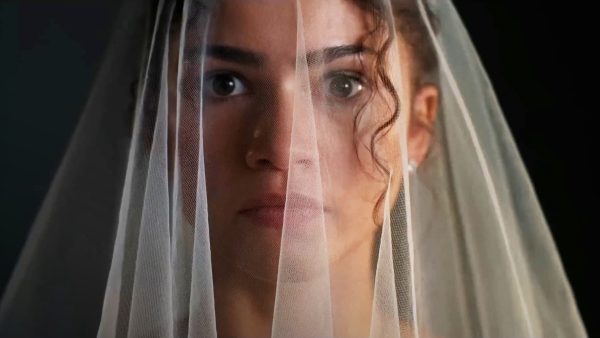


The Drama is a recent film that was released in April of 2026, starring Zendaya and Robert Pattinson. Directed by Kristoffer Borgli, this romantic drama has taken the world by storm with its subject matter and overall hype leading up to its release. The Drama gained attention immediately from its casting announcement, but the interest in this film only grew upon the release of the trailer. The main draw of the trailer was that Zendaya’s character, Emma, reveals to her soon-to-be husband, Charlie (Robert Pattinson), the worst thing she’s ever done. However, the trailer does not tell the viewer what she did; that was kept for the movie viewing. The reactions of the people around Emma allow the viewers to surmise that whatever she did was very bad. This marketing scheme worked exceedingly well for the film, as The Drama surpassed $100 million at the global box office. After everyone flocked to theaters to find out the highly anticipated twist, many viewers left with mixed feelings on the subject matter. This led to a bigger conversation on what topics should/shouldn’t be used in film, taking into consideration the situation the topic is involved in. So, warning: The following will include major spoilers for The Drama.
In the scene everyone was waiting for, Emma reveals that when she was a teenager, she had planned a school shooting. In this scene, where three people had shared their secrets before her, the group immediately falls silent, and, as promised, drama arises. As Emma explains her past more throughout the film, she says how she didn’t actually go through with the plan, and she has become a changed person, 15 years later. The rest of the movie follows the main couple as they grapple with how to handle this newly shared information so close to their wedding, and as public opinion and anxieties consume them. Audiences, however, felt unsure how to take the usage of shootings in the story. Gun violence is an ongoing, relentless issue in America, and so many lives are taken each year by school shootings. With an “inappropriately” comedic tone throughout, the topic of mass shootings felt insensitively out of place for some viewers. This begs the question: Can the usage of certain taboo topics in media cross the line?
While the public was split, many people agreed that tragic topics like this shouldn’t be off limits in film. It is important to share the reality of things that really do happen in the world, even if they are placed in unexpected stories. Though it’s hard to face, situations like that of Emma’s do occur, so why would it be off limits to share? Emma does not go through with her plan, and The Drama doesn’t elicit a “pro-violence” narrative. Instead, The Drama builds commentary on the person behind the shootings we see in real life, and shows how one can better themselves before it is too late. Also, guns and violence are not by any means the main focus of the film. The Drama explores the intricacies in relationships and how trust, or a lack thereof, can change one immediately. With themes of hypocrisy and morality, The Drama uses the weight of a mass shooting to enact conflict between its characters and reveal the limits of love. This, however, was for some why they had a problem with the content of The Drama. Some felt that gun violence is used in a way that makes the impact of shootings more minor than it actually is. While it’s posed as a major issue in the film, the situational comedy and intentionally awkward jokes presented with the subject matter can diminish the sheer weight of the circumstances. However, in this situation, the film takes the heavy topic and doesn’t try to purposely invalidate it. Upon talking to English and Film teacher here at Smithtown East, Mrs. Santangelo, she took this side as well. She explained how she took The Drama as “a commentary on how people respond to situations,” rather than focusing on the act of gun violence itself. Furthermore, she said how the characters in the film “thought they should act horrified by what [Emma] did, not even knowing what they felt themselves.” Mrs. Santangelo went further into what she gathered, saying how she saw the film as more of an insight into relationships. The drama that arises from what Emma shares shows that “a real relationship requires forgiveness,” Mrs. Santangelo states, sharing that the film emphasizes how “not everyone is perfect,” especially in a romantic setting. By stepping outside the box and presenting a complex story with heavy themes, like The Drama, filmmakers can explore conversations the public is too afraid to have, possibly allowing for a different, more nuanced take on a bigger picture. Proved by the ideas of Mrs. Santangelo, heavy topics can be incorporated to develop universal truths and expose issues in society, especially, in a way that this film goes about it. Avoiding impactful subjects in film altogether is not beneficial for an openness in society. Stories should not be kept from being told purely because they are “controversial.”
Personally, I think The Drama is an excellent film that is both reflective and entertaining. I did not feel that the film took the issue of mass shootings and made it into a joke, but rather staged its real-world significance and used it as a catalyst for the extent of love. Instead of raising tone-deaf questions like “Is gun violence bad?” The Drama leaves the audience questioning, “Would I be able to put something like this behind me, and continue my relationship?” Along with that, I think the darkly comedic tone works in favor of the film, as I think it portrays its heavy content more palatably. While the audience might laugh at the absurdity of the situation the couple is in, it doesn’t take away from the subject matter. I, myself, am always open to exploring controversial media that is not often delved into. I believe that there is always room for new conversations, and I encourage filmmakers to take risks and go to new places in their work.